


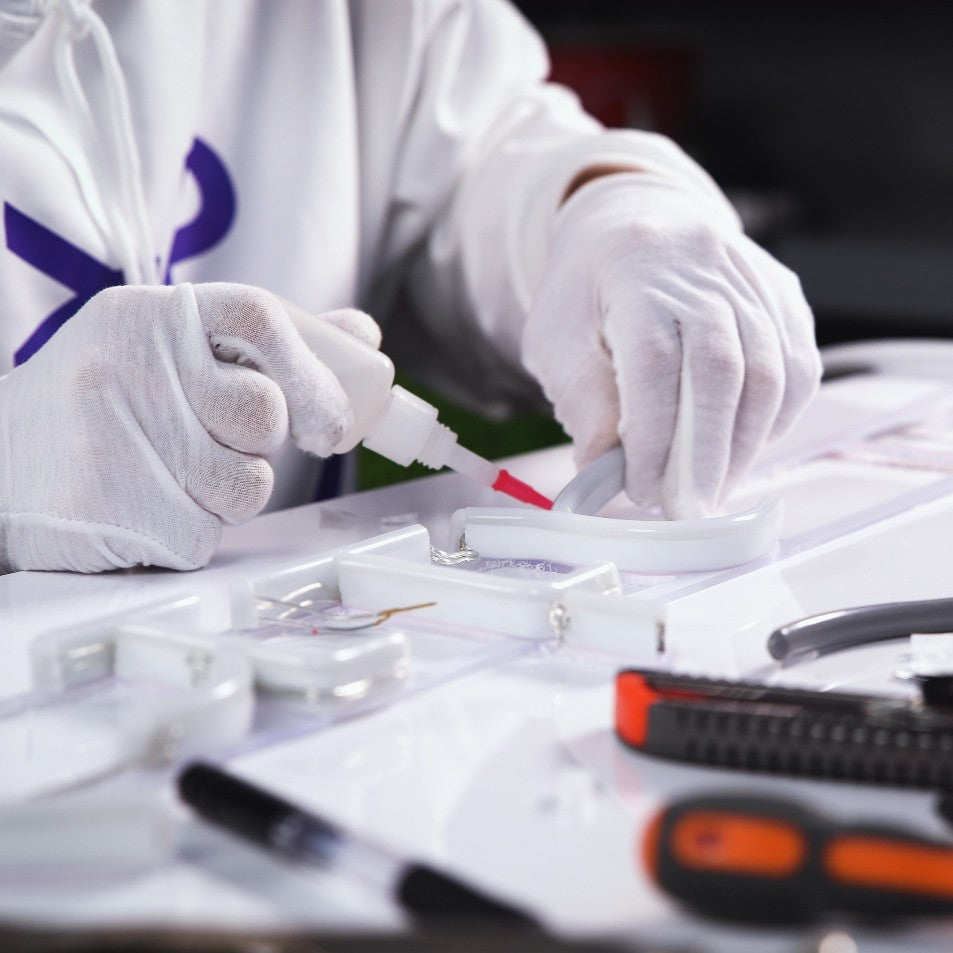
There’s something undeniably captivating about neon. The way it glows—bold, warm, and full of attitude—can instantly transform a space. For decades, this glow came from hand-blown glass tubes filled with noble gases, shaped by skilled artisans in a meticulous and risky process.
But today, there’s a smarter, safer way to bring neon into your life: LED neon. And while it looks just as striking as its traditional counterpart, it’s far more accessible—and endlessly customizable.
In this guide, we’ll walk you through how neon signs are made, from classic techniques to the modern LED approach we use at Yellowpop. We’ll break down the differences, the pros and cons, and why LED neon is the ideal choice for everything from home décor to large-scale art installations.

Traditional neon: art, chemistry, and risk
Before LED came along, neon signs were crafted through a delicate blend of science and art. These glowing pieces were hand-formed using hollow glass tubes, filled with inert gases like neon or argon that emit color when electrified.
The process of traditional neon lights
- Design layout: It starts with a full-scale design, often sketched on fire-resistant paper. This becomes the bending guide for the glass tubing.
- Heat and bend glass: Using ribbon burners or hand torches, artisans heat sections of the tube until they’re soft enough to bend by hand.
- Install electrodes: Electrodes are fused to both ends of the tube to prepare it for electrical current.
- Evacuate air, insert gas: A vacuum pump removes all air from the sealed tube. Then, neon or argon gas is injected.
- Seal and power: The tube is sealed, and a high-voltage transformer is used to excite the gas inside, causing it to glow.
- Color and effect tuning: Depending on the gas, glass tint, and coatings, the final color and brightness are fine-tuned.
Depending on the gas and the type of glass coating, you get different colors—neon glows red-orange, argon plus mercury gives off blue, and so on. The result? A radiant display that feels both nostalgic and electric.
But as stunning as it is, traditional neon comes with real limitations:
- It’s fragile, high-voltage, and expensive
- Requires expert handling and special equipment
- Difficult to scale or replicate for personal or commercial use
Enter LED neon: the modern glow
This is where LED neon changes everything.
At Yellowpop, we use flexible LED tubing to recreate the look of traditional neon—without the risks. The tubing is made from durable silicone or PVC, and tiny LEDs inside create a continuous, diffused glow that mimics the warmth and intensity of vintage signs.

Why LED neon lights is taking over
- Low voltage = safer for homes, offices, events
- Flexible materials = easier to shape, ship, and install
- More color control = including dynamic RGB options
- Energy efficient = less power, longer lifespan
Lightweight and durable = no shattering, no glass
Whether you’re designing a playful quote for your bedroom or a branded sign for your storefront, LED neon opens the door to creativity—without compromise.
DIY possibilities with LED neon
One of the biggest perks of LED neon? You don’t need a studio full of blowtorches and vacuum pumps to work with it.
In fact, many people create their own custom signs at home using LED neon flex tubing. It’s flexible, safe to handle, and works with standard power supplies.
What you’ll need:
- LED neon flex tubing (in your choice of color)
- Acrylic backing board
- Adhesive clips or strong glue
- Wire cutters and power adapter
Optional: heat gun for tight bends
Steps for how to make your own neon sign:
1. Sketch your design on paper or digitally, then print it to scale.
2. Attach the tubing to your backing board using clips or glue.
3. Bend and shape the tubing to follow your layout.
4. Connect your wiring to a compatible power source.
Plug it in and glow up your space instantly.
While DIY is great for small projects, Yellowpop signs are built to last—engineered with premium materials and expert design for a polished, professional finish.

Neon vs. LED neon: what’s the difference?
The verdict? If you’re chasing the retro charm of neon with a modern twist, LED neon gives you the glow without the gamble.
Choose Yellowpop for LED neon light designs that shine
At Yellowpop, we believe neon should be as bold as your imagination—and as effortless to enjoy as flipping a switch.
We specialize in LED neon art that blends design, durability, and self-expression. From minimal modern lettering to pop-art collaborations, our signs go far beyond simple lighting—they become part of your identity regardless if you’re looking to spruce up your living space or liven up your own business.
What sets us apart:
- Custom designs tailored to your message, mood, and space
- Fast production and global delivery
- Support for individuals, artists, brands, and designers
- LED technology that lasts for years
Our collections are inspired by everything from Keith Haring to Mickalene Thomas. Whether you want a one-of-a-kind piece or a branded centerpiece, we’re here to bring your vision to light.
Your final glow with Yellowpop
So yes, you can make your own LED neon sign—but if you want something that lasts, shines brighter, and truly pops? Yellowpop is ready to light the way.
